Category: viz

  • Unlocking the power of creative portrait photography: tips for captivating images

    Unlocking the power of creative portrait photography: tips for captivating images

    Creative portrait photography is more than just capturing a person’s likeness; it is an art form that combines the essence of a subject with the vision of the photographer. It allows photographers to tell stories, evoke emotions, and portray characters through the lens. To excel at this craft, one needs to embrace innovation, master technical skills, and understand the subtle interplay between the subject and the environment.

    Technical mastery and camera settings

    Understanding your equipment

    Mastering your camera is the first step in taking control of the creative process. Familiarity with camera settings, such as aperture, shutter speed, ISO, and white balance, is crucial. Aperture controls the depth of field and contributes significantly to the focus aesthetic. A wider aperture (lower f-number) creates a shallow depth of field, blurring the background and drawing attention to the subject. In contrast, a smaller aperture (higher f-number) brings more of the scene into focus.

    Shutter speed affects the portrayal of motion. A fast shutter speed will freeze action, while a slower speed can introduce blur, adding a sense of movement or drama to the portrait. ISO determines the camera sensor’s sensitivity to light. Higher ISO values facilitate shooting in lower light conditions but can introduce grain or ‘noise,’ potentially diminishing the image quality.

    The magic of lighting

    Lighting is paramount in portrait photography. It sculpts the subject, sets the mood, and can drastically alter the feel of an image. Experiment with different lighting setups, from natural light to studio strobes or continuous lights. Observe how the direction your light hits the subject – be it front, side, or back – can change the narrative of your portrait. Rembrandt lighting, butterfly lighting, and loop lighting are just a few techniques used to shape the subject’s features and create depth.

    Composition and framing techniques

    Rule of thirds and beyond

    While the rule of thirds is a well-known compositional tool, don’t hesitate to break it for creative impact. Placing the subject off-center can create tension and interest, whereas centrally composed subjects can offer a sense of gravitas and significance. The entire composition should harmoniously guide the viewer’s eye to the subject, using lines, shapes, and color contrasts.

    Environmental context

    Incorporating environmental elements into portraits adds context and narrative depth. Use the surroundings to reflect the personality or the story of the individual you are capturing. Be diligent in choosing backgrounds that complement rather than distract, looking for textures and colors that enrich the overall composition.

    Crafting the subject’s representation

    Engaging with the subject

    Building a rapport with your subject is integral to capturing genuine emotion and initiating a reaction in your viewer. Encourage the subject to be comfortable and confident in front of the camera. Direct them but be open to spontaneous moments or natural expressions that can often result in the most impactful portraits.

    Wardrobe and styling

    Outfit and accessory choices play a significant role in setting the tone for the portrait. They can help tell a story, signify a time period, or add a layer of symbolism to the image. Select clothing and props that align with the creative vision and elevate the final image.

    Exploring poses and expressions

    Body language and facial expressions are powerful conveyors of mood and character. Experiment with various poses and expressions to find what best conveys the desired message in the portrait. Subtle changes, such as the angle of the head or the gaze direction, can make a profound difference.

    Post-Processing techniques

    The art of editing

    Post-processing is where the captured image can truly transform into a creative portrait. Through editing software, you can adjust colors, contrast, and sharpness to enhance the mood. Techniques such as dodge and burn can highlight specific areas, directing the viewer’s focus. Retouching should be done judiciously to refine the image while maintaining the subject’s authenticity.

    Color grading for atmosphere

    Color grading allows the photographer to infuse the image with a particular atmosphere or emotive quality. Consider how different color palettes can elicit various feelings, such as warm tones for nostalgia or cool tones for a somber mood. Consistent color grading also unifies a series of portraits and can become part of a photographer’s signature style.

    Overcoming challenges in portrait photography

    Dealing with unpredictable elements

    Outdoor shooting often presents unpredictable weather conditions and changing light. Flexibility and the ability to adapt quickly to these changes are key. Learn to make the most of each situation: use the wind to add dynamic movement, or clouds to diffuse harsh sunlight. Portrait photography, like any creative endeavor, requires problem-solving and improvisation.

    Continuous learning and experimentation

    The journey of creative portrait photography involves constant learning and experimentation. Seek inspiration from other art forms, attend workshops, and review your work critically. Every new portrait is an opportunity to refine your skills and develop your own unique voice in the realm of photography.


    Creative portrait photography opens a window to the photographer’s soul, inviting viewers to explore the multifaceted depths of human expressions and emotions. With these tips and techniques, you can unlock the power of your camera and imagination to capture captivating images that resonate and linger in the minds of those who view them. By pushing the boundaries and committing to continuous growth, the world of creative portraits becomes an infinitely rich canvas for storytelling and artistic expression.


  • Mastering the art of winter landscape photography: essential tips and techniques

    Mastering the art of winter landscape photography: essential tips and techniques

    Mastering the art of winter landscape photography: essential tips and techniques

    Winter provides a unique opportunity for photographers to capture the raw beauty of nature. As the landscape transforms into a serene white canvas, it beckons with the promise of dramatic scenes and fresh perspectives. To create compelling winter landscape photographs, one must wield both creativity and technical expertise. This article delves into the essential tips and techniques that will enable photographers to master the art of winter landscape photography.

    Understanding winter light

    The quality of light in winter is significantly different from other seasons. With the sun staying low in the sky throughout the day, photographers can exploit the elongated golden hours. This soft, diffused light enhances the mood and adds a warm glow to the icy terrain.

    Photographers should plan their shooting schedule around this light. Early morning and late afternoon provide the best natural illumination for winter landscapes, as the low-angle sunlight creates long shadows and reveals textures in the snow.

    Composition and perspective adjustment

    To capture the essence of a winter scene, thoughtful composition is key. Foreground interest can be a powerful compositional element, leading the eye into the frame and adding depth to the image. Objects like rocks, ice formations, or vegetation peeking through the snow can serve as effective focal points.

    In addition, adjusting your perspective can dramatically change the image. Shooting from a higher vantage point offers a panoramic view, while getting low to the ground can accentuate the shapes and patterns in the snow.

    Exposure challenges and solutions

    Winter landscapes come with their share of exposure challenges. Snow reflects a lot of light, which can trick the camera’s metering system into underexposing the scene. To address this, photographers should manually adjust their exposure, typically by increasing it by 1 to 2 stops. This technique, known as ‘exposing to the right’, ensures the snow appears truly white instead of dull gray, while preserving details in the highlights.

    Using the histogram on your camera is an invaluable tool for getting the exposure right. Aim for a histogram that is shifted to the right side without clipping the highlights.

    Embracing the elements

    Winter weather conditions like snowfall, fog, and ice can be challenging, but they also offer a wealth of creative opportunities.

    Snowfall infuses photos with a sense of tranquility and movement. Capturing individual snowflakes can be achieved through faster shutter speeds, while a slower shutter blurs the falling snow, creating a veiled effect.

    Fog adds a layer of mystery and mood to winter landscapes. It can simplify busy scenes and highlight subjects, creating a minimalist aesthetic. Embrace the fog by focusing on contrast and shape within your compositions.

    Ice formations, with their intricate patterns and textures, can serve as mesmerizing subjects. Using a polarizing filter can reduce glare and bring out the details in the ice, enhancing the final image.

    The right gear for the job

    Preparing the right gear is paramount in winter landscape photography. Quality cameras and lenses are essential, but a few additional pieces of equipment can make all the difference:

    • Tripods are crucial for stability in conditions that often require slower shutter speeds. Opt for a tripod that is sturdy yet light enough to carry through snow.
    • Lens hoods and polarizing filters manage glare and reflection from the snow and ice.
    • Extra batteries are necessary as the cold can rapidly deplete their power. Keeping them warm, such as in an inner pocket close to your body, prolongs their life.
    • Remote shutters or intervalometers minimize camera shake during long exposures.

    Camera settings for crisp wintery shots

    Optimal camera settings are imperative to capture the winter landscape effectively. A low ISO minimizes noise in the final image, preserving detail. Aperture settings vary depending on the desired depth of field, but often, a higher f-stop (around f/11 to f/16) is used to keep more of the scene in focus. Shutter speed will depend on the motion present in the scene and your creative vision.

    Protective measures for your equipment

    In freezing conditions, cameras and lenses are susceptible to damage. Condensation can occur when moving between significantly different temperatures, such as leaving a warm environment for the chilly outdoors. To acclimatize your gear, place it in a sealed bag when transitioning locations and allow it to adjust gradually.

    The necessity of post-processing

    Like any genre of photography, post-processing plays a pivotal role in winter landscape photography. Correcting white balance is crucial, as snow can often appear blue in images due to the natural light’s color temperature. Adjusting white balance during editing ensures the snow appears true to life.

    Furthermore, tweaking contrast and clarity can bring out details and textures in the snow and surrounding elements. Be careful not to overexpose highlights in post-production; snow should retain texture and detail to appear realistic.

    Exploration and experimentation

    While technique and gear are vital, the spirit of adventure is arguably the soul of winter landscape photography. Exploring different locations, often untouched after a fresh snowfall, provides the chance to capture unique images. This exploration should be partnered with constant experimentation in composition, perspective, and lighting to discover what renders the most striking results.

    Honing your craft through practice

    Practice is fundamental in mastering winter landscape photography. With each outing, photographers learn more about handling their gear in cold conditions, refining their eye for composition, and understanding the nuances of winter light. Documenting different weather conditions and times of day will also add diversity to your portfolio.

    Weather safety and ethical considerations

    A vital aspect often overlooked in the pursuit of the perfect shot is safety. Winter environments can pose significant risks, from hypothermia to unexpected weather changes. It’s essential to prepare adequately—wear appropriate clothing, understand the terrain, and always have a safety plan.

    Moreover, ethical considerations must be made. Preserving the natural environment and respecting wildlife should be at the forefront of every photographer’s mind when shooting winter landscapes. Leave no trace behind and adhere to local regulations to ensure the continued beauty of the locations we seek to capture.

    By embracing these tips and techniques, photographers can craft stunning winter landscapes that resonate with viewers. Focusing on light, composition, and exposure, while safeguarding oneself and one’s gear, provides the foundation for exceptional winter photography. With practice and experimentation, photographers evolve, honing their ability to convey the profound silence and stark beauty of the winter environment through their images. As each snowflake charts its unique path, so too should the photographer in capturing the essence of winter’s serene artistry.

  • Selecting the perfect synthesizer: key factors to consider for musicians

    Selecting the perfect synthesizer: key factors to consider for musicians

    When it comes to crafting the perfect sound, the synthesizer you choose plays a pivotal role. Musicians, producers, and enthusiasts alike understand that a synthesizer is not just an instrument—it’s a gateway to an expansive universe of sonic possibilities. With the vast array of synthesizers available, selecting the ideal one can be both an exciting and daunting task. Herein, we’ll explore the essential factors to consider ensuring you find a synthesizer that harmonizes with your musical needs and aspirations.

    Understanding different types of synthesizers

    Analog vs. Digital: A Sonic Debate
    Before delving into specific functions and features, it’s vital to grasp the fundamental difference between analog and digital synthesizers. Analog synthesizers use electronic circuits and analog signals to produce sounds that are warm and rich with harmonic overtones. Their digital counterparts, meanwhile, utilize computer algorithms and often offer a broader range of sounds and features. Preferences can be subjective, so it’s beneficial to play both types and listen carefully to decide which meets your tonal requirements.

    Modular Synthesizers: Customizable Soundscapes
    For those craving the utmost in flexibility, modular synthesizers provide a system where you can mix and match different components (modules) to create unique setups. It requires a deeper understanding of signal flow and sound design, so be prepared for a steeper learning curve if you choose this path.

    Software Synthesizers: In-the-Box Innovation
    Advances in technology have brought about highly sophisticated software synthesizers that can be used within digital audio workstations (DAWs). If you’re operating in a space-conscious or budget-restricted environment, these may offer a happy medium between practicality and creative potential.

    Key features and specifications

    Key Features and Specifications

    Polyphony: From Monophonic Melodies to Chordal Cascades
    One of the first specifications you should check is polyphony—the number of notes a synthesizer can produce simultaneously. Monophonic synthesizers allow you to play one note at a time, ideal for bass lines and solos, while polyphonic models let you play chords and layered textures. Decide what your music demands and choose accordingly.

    Sound Engine and Synthesis Methods
    The sound engine is the heart of any synthesizer, and understanding the synthesis method is key to achieving your desired sound. Subtractive synthesis is one of the most common types, shaping sounds by filtering frequencies from generated waveforms. FM synthesis, wavetable synthesis, and granular synthesis are other methods that offer different sound palettes and creative opportunities.

    Oscillators and Filters: Tailoring Your Tone
    Oscillators generate the raw waveforms that form the foundation of your sound, while filters sculpt and fine-tune the harmonic content. Look for synthesizers that offer multiple oscillator types and the ability to manipulate waveforms extensively. Filters should also be a focal point—particularly the slope and type (low-pass, high-pass, band-pass, etc.)—as they significantly shape the character of the sound.

    Modulation and Control Sources
    Synthesizers with comprehensive modulation options—like LFOs (low-frequency oscillators), envelopes, and step sequencers—provide dynamic control over various parameters. This depth of modulation capability allows for evolving, expressive sounds.

    User Interface and Workflow
    The user interface determines how intuitively you can navigate and manipulate the synthesizer. A well-designed layout with hands-on controls can drastically enhance the creative workflow, while a cluttered or confusing interface may stifle it.

    Connectivity and Integration
    In today’s connected world, it’s imperative to select a synthesizer that fits seamlessly into your existing setup. Consider the variety of inputs/outputs, MIDI implementation for communication with other gear, and CV/Gate options for interfacing with modular systems or vintage equipment.

    Practical considerations

    Size and Portability
    Think carefully about where and how you’ll be using your synthesizer. Studio-bound musicians might prefer larger, more feature-rich options, while gigging artists may need something compact and light for easy transportation.

    Budget Constraints
    Your financial situation will undoubtedly influence your decision. Luckily, with the wide range of synthesizers on the market, it’s possible to find a suitable option at almost any price point. Invest in quality where it counts, but remember that more expensive does not always equate to better for your unique needs.

    Support and Community
    Finally, consider the manufacturer’s reputation for customer support and the presence of a user community. Access to resources, tutorials, and a network of fellow enthusiasts can make a world of difference as you embark on your sonic journey.

    Musicians in search of the perfect synthesizer must weigh these key factors meticulously. Explore and experiment with different types and brands to find the one that resonates with your artistic voice. With technology evolving rapidly, the key is to select a synthesizer that not only sounds right today but will continue to inspire and grow with you for years to come.

  • Studio portrait photography: essential tips for captivating shots

    Studio portrait photography: essential tips for captivating shots

    Studio Portrait Photography: Essential Tips for Captivating Shots

    Studio portrait photography offers the perfect blend of art and technique, creating compelling representations of subjects within the controlled environment of a studio. Mastery here is not simply about capturing an image; it’s about forging a connection between the subject and the observer. This article delves into essential tips that refine the art of studio portrait photography, from lighting setups to post-processing techniques, ensuring that every shot is a captivating exploration of your subject’s persona.

    Understanding light: the foundation of studio photography

    Lighting is the cornerstone of all photography, but in the studio, it carries an even greater significance. Commanding the subtleties of shadows and highlights determines the mood and depth of your portrait. Opt for a basic three-point lighting setup — the main light, fill light, and backlight — to start with a classic, balanced look. Experiment with the positioning and intensity of these lights to sculpt the subject’s features and set the desired tone.

    Continuously modify the characteristics of the studio light through diffusers and reflectors. Soft boxes produce a gentle diffusion, perfect for smoothing skin tones and creating a flattering, even light. Meanwhile, harnessing a snoot or a grid can help you direct a focused beam for dramatic effect, adding intensity to a portrait.

    The art of composition: framing your subject

    The composition is more than the mere placement of the subject within the frame; it’s an artistic choice that can narrate a story. The rule of thirds is a reliable companion in your compositional repertoire, prompting you to intersect key features of your subject at dynamic points. Negative space, when used effectively, speaks volumes, offering an insight into the subject’s surroundings or, conversely, focusing the observer’s attention directly on the person.

    Remember to pay close attention to the eyes, as they are often considered the windows to the soul. Whether through a direct gaze or a thoughtful look away, the eyes can convey power and emotion that resonates with the viewer.

    Selecting the right equipment: more than just a camera and lens

    Elevate your portraits from good to great with a well-thought choice of camera and lens. A full-frame DSLR or mirrorless camera provides the desired detail and depth of field control, crucial for studio work. Pair it with a prime lens in the 85mm to 105mm range for an ideal compression and bokeh effect.

    Tripods and remote triggers become crucial when seeking precision and stability in your shots. The use of a tripod can alleviate camera shake, leading to sharper images, while a remote allows for seamless interaction with the subject without the barrier of the camera being a constant presence.

    Posing techniques: bringing out the character

    Engage with your subject and guide them through poses that feel natural and expressive. Direct them towards poses that complement their body type, highlight their best features, and reflect their personality. Subtle adjustments, such as shifting weight to the back foot, can dramatically alter the grace and perceived comfort in an image. Incorporate props to add context and a sense of story to the portrait, but ensure they don’t detract from the main focus — the subject.

    Facial expressions: capturing authentic emotions

    Foster a relaxed atmosphere within the studio to encourage genuine expressions. Engage in conversation, listen actively, and provide assurance to help subjects drop their guard and reveal their true selves. The nuance of a genuine smile or the intensity of a contemplative frown can elevate a portrait from a simple photo to a profound visual experience.

    The importance of background selection

    The choice of background can bolster or break the impact of your portrait. Use neutral tones to keep the focus on the subject or deploy bold colors to complement skin tones and attire for a more impactful image. Seamless paper backgrounds or muslin drops are staples in a studio setting, offering a wide range of colors and finishes to suit the desired effect.

    Post-Processing: the finishing touch

    Image editing is the final but critical phase in studio portrait photography. Your goal in post-processing is to enhance, not overpower. Adjust exposure, contrast, and color balance to refine the image. Soften the skin with care, always preserving the natural texture. Dodging and burning can be implemented to further define features and give the portrait depth.

    Retain the integrity of the image and avoid heavy-handed alterations that can make the subject unrecognizable. Use tools like frequency separation sparingly. Aim for a polished look that feels both professional and profound.

    Constant learning: evolving your craft

    Crafting the perfect portrait is a perpetual journey of learning and refinement. Constantly analyze your work, seeking new ways to improve. Attend workshops to hone your skills, browse galleries to find inspiration, and collaborate with others to expand your creative horizons.

    Through practice, experimentation, and patience, your competence in studio portrait photography will flourish. With each session, aim to refine your style, perfect your technique, and produce portraits that not only showcase physical features but also encapsulate the essence of the subject, leaving a lasting impression on every observer.

    In creating captivating shots, the role of studio portrait photography extends beyond the technical; it’s an embrace of all facets that make a photo truly exceptional. From the intricate dance with lights and shadows to the subtle details in post-processing, your journey in portrait photography promises a fulfilling quest for the art within the image.

  • Understanding purification rituals: insights and practices for spiritual cleansing

    Understanding purification rituals: insights and practices for spiritual cleansing

    Spiritual cleansing or purification is a universal facet of human culture, extending across religions, philosophies, and communities worldwide. The core of these practices is the belief in the possibility of removing negative energies, thoughts, or spirits to attain a state of greater purity, balance, and wellbeing. Purification rituals can range from simple acts done in the privacy of one’s home to elaborate ceremonies involving communities.

    The philosophy behind spiritual cleansing

    The Philosophy Behind Spiritual Cleansing

    The significance of purity

    At the heart of purification rituals lies the concept of purity, which is often seen as a state of spiritual or moral cleanliness necessary for health, peace, and harmony. Many cultures believe that impurities can cling to individuals, spaces, or objects, potentially leading to undesirable outcomes.

    Energetic hygiene

    Much like the necessity for physical cleanliness, spiritual cleanliness is thought to play a key role in maintaining overall wellbeing. Regular spiritual cleansing is sometimes referred to as ‘energetic hygiene’—a practice to clear the psychic debris that can accumulate over time.

    Balance between physical and spiritual

    Purification rituals underscore the belief in the interconnectedness between the physical and spiritual realms. Practitioners often seek a balance, implying that cleanliness in our physical environment can influence our inner spiritual world, and vice versa.

    Common purification rituals across cultures

    Smudging and incense burning

    One of the most widespread purification methods is the burning of sacred herbs or incense. Native American smudging with white sage, palo santo in South American traditions, and the burning of frankincense in Christian churches are all forms of purification by smoke, believed to carry away negative influences.

    Water rituals

    Water, with its life-giving and cleansing properties, is universally revered as a purifying element. Ritual baths, like the Islamic Ghusl or the Hindu practice of bathing in the Ganges, are examples of purification through immersion in or sprinkling with water.

    Fasting and dietary purification

    Fasting, found in practices from Lent in Christianity to Ramadan in Islam, is a form of bodily purification. It’s believed that abstaining from certain foods or all food for a time can clear the mind, cleanse the body, and renew the spirit.

    Sound cleansing

    The use of sound, from the ringing bells in Hindu temples to the singing bowls in Tibetan rituals, is another means to purify a space or individual. The vibrations are thought to break up stagnant energy and restore harmony.

    Physical and mental disciplines

    Yoga, martial arts, and similar disciplines combine physical movement with mental focus and are often intended as means to purify the body-mind complex, allowing for a free flow of energy and a calm, clear mind.

    The practice of spiritual cleansing

    Setting intentions

    The power of intention is paramount in purification rituals. A clear and focused mind can direct the specific effects of the ritual, ensuring that the actions taken are not merely symbolic, but also transformative.

    Creating sacred space

    Before a purification ritual is performed, it is often necessary to establish a sacred space. This space acts as a temporary threshold between the mundane world and a consecrated environment conducive to spiritual work.

    Respect for tradition

    While personal adaptation of purification rituals is common, respect for the traditional origins and cultural meanings of these practices is essential. This respect allows for a deeper connection to the ritual’s roots and its intended effects.

    Integration into daily life

    Many find that integrating regular purification rituals into their daily lives helps maintain a constant state of spiritual cleanliness. Daily meditations, the use of affirmations, or even the simple act of lighting a candle can act as frequent reminders of one’s commitment to spiritual health.

    Purification rituals for personal growth

    The transformative potential of purification rituals extends beyond mere spiritual cleanliness—they can be powerful tools for personal growth and self-reflection.

    Acknowledging and releasing negative patterns

    Through purification rituals, individuals can confront negative habits or thought patterns. Bringing these to light and symbolically cleansing them can set the stage for releasing such patterns and adopting more positive behaviors.

    Healing and rejuvenation

    Participants in purification rituals often report feelings of healing and rejuvenation. The processes may alleviate emotional burdens and generate a refreshed sense of purpose and clarity.

    Fostering connection

    Shared purification rituals can foster a sense of community and connection. When practiced in groups, these rituals create spaces of mutual support and shared intention, strengthening the social fabric of the group.

    Adapting rituals for modern life

    Modern adaptations

    Contemporary lifestyles may not always accommodate traditional practices. Therefore, adapting rituals to fit modern constraints is both a common and essential process. This adaptation might involve shortening the duration of practices or using alternative materials that are more readily available.

    Accessibility to all

    The benefits of spiritual cleansing should not be limited to those within specific spiritual traditions. As such, practices have been developed and modified to be accessible for anyone seeking purification, regardless of their cultural or religious background.

    Technology and purification

    With the advent of technology, new forms of cleansing rituals have emerged. Apps that guide users through meditation or affirmations, or online communities that hold virtual purification rituals, allow for connectedness and personal growth in the digital age.

    Final thoughts on purification rituals

    Spiritual cleansing remains a powerful practice, deeply anchored in the human experience. While the diverse array of purification rituals are as varied as the cultures from which they originate, their unifying goal is to enhance life, nurture spiritual growth, and foster resilience of both individuals and communities. Delving into the insights and practices of these rituals offers a pathway to greater understanding of the self and the unseen energies that influence our lives.

    The exploration of purification rituals is a journey into the soul’s landscape—a landscape where intention, tradition, and transformation converge. Embracing these practices can lead to a life marked by greater peace, balance, and connection, directly impacting one’s personal evolution and, by extension, the collective wellbeing of our societies. Engaging in spiritual cleansing is more than a ritual act; it is a commitment to an attentive and considered way of living, intertwined with the sacred and the profane, the material and the ethereal, the ordinary and the extraordinary.

  • Step-By-Step instructions for creating clay sculptures: beginner’s tutorial

    Step-By-Step instructions for creating clay sculptures: beginner’s tutorial

    Sculpting with clay is an art form with a rich history, treasured for its versatility and the tactile experience it affords artists. If you’re looking to embark on the journey of transforming your creative ideas into tangible works of art, clay sculpting can be a highly satisfying and therapeutic practice. This tutorial will guide beginners through the essential steps for creating their first clay sculpture. By the end, you’ll be equipped with the knowledge to start shaping your visions into reality.

    Choosing the right clay

    Before you begin molding your masterpiece, selecting the appropriate type of clay is pivotal. Clay varieties range from earthenware and stoneware to polymer and air-dry clays. Earthenware is perfect for those starting out due to its forgiving nature and low cost. Stoneware is a sturdier option, renowned for its durability after firing. Polymer clay, alternatively, hardens in a home oven and is optimal for small, detailed projects. Air-dry clay doesn’t require a kiln, making it convenient for first-time sculptors who might not have access to such equipment.

    Gathering necessary tools

    The essence of a sculptor’s craft lies in the tools they employ. At a minimum, you’ll need:

    • Clay modeling tools (ribbons, wires, and loop tools)
    • Knife and cutting tools
    • Rubber-tipped brushes
    • Rolling pin or slab roller
    • A work surface, ideally a canvas or wooden board
    • Water and a spray bottle for moisture control
    • Sponges and cloths for smoothing and finishing

    Investing in a basic sculpting tool kit is a wise choice; these sets typically include instruments suited for an array of sculpting tasks.

    Preparing your space and clay

    Whether your workspace is a small table or a sprawling studio, keeping it clean and organized is fundamental. Cover your work surface with canvas or wax paper to protect it and make cleanup easier. Knead your clay thoroughly to eliminate air bubbles, which can cause cracks or explosions during the firing process. This process, called wedging, prepares the clay for use by creating an even consistency.

    Building the armature

    For larger sculptures, an armature is needed. This internal structure, often made of metal or rigid materials, supports the weight of the clay. Creating an armature can be as simple as forming a wire skeleton or as complex as constructing a detailed wooden frame. The key is to make sure it’s stable and proportionate to the intended size of your sculpture.

    Shaping the initial form

    The joy of clay sculpting emerges when you begin to mold your initial form. To start, roll, pinch, or coil the clay to create a base shape. Use your hands and tools to manipulate the material, always mindful to maintain an even thickness to avoid weak spots. Reference images or drawings to keep the proportions accurate if you’re creating a representational sculpture.

    Adding details to your sculpture

    Adding Details to Your Sculpture

    Once the basic shape is established, delve into the finer details. This stage requires a delicate touch and patience. Utilize your loop and ribbon tools to carve out features, and rubber-tipped brushes to smooth the surface. For texturing, try using household items – a toothbrush, comb, or lace can imprint fascinating patterns onto your sculpture.

    Continuous moisture management

    Throughout the sculpting process, maintaining the right moisture level is critical. The clay should be soft enough to manipulate but not too wet, as this can cause slumping or deformation. Use a spray bottle to mist the sculpture, keeping it malleable. Conversely, if areas need to dry slightly to support additional weight, use a heat gun or hairdryer on a low setting, or simply allow it to air dry slightly.

    Hollowing out your sculpture

    If your sculpture is solid clay, it’s important to hollow it out to reduce the risk of cracking during drying and firing. Carve out the interior to an even wall thickness of about 1/4 to 1/2 inch. Be sure to keep the removed clay pieces moist if you plan to reattach them or use them later.

    Refining the surface

    Achieving a smooth or textured finish on your sculpture is an art in itself. Damp sponges, cloths, and fingers can smooth out surfaces, while carving tools can create intricate textures. Patience is indispensable during this phase, as significant changes become more challenging once the clay begins to dry.

    Drying and firing

    Drying is a slow process that should not be rushed. Place your sculpture in a dry, out-of-the-way area and turn it occasionally for even drying. Once bone-dry, it’s ready for bisque firing in a kiln, which typically reaches temperatures up to 1,800 degrees Fahrenheit. Firing transforms the clay to a permanent state, hardening your work and preparing it for glazing if desired. Be mindful of the specific temperature requirements of your clay type.

    Final thoughts and analysis

    Sculpting with clay is a meditative and rewarding discipline that encourages artistic growth and experimentation. This step-by-step guide serves as a road map to help beginners navigate the complexities of creating a clay sculpture, from initial preparation to the final stages of drying and firing. Attention to detail, careful observation, and a steady hand are invaluable to sculptors, as is the willingness to learn from each piece created. Mastery over clay is a continuous process – one that flourishes with practice, persistence, and passion.

  • Getting started with caving: essential tips for beginners

    Getting started with caving: essential tips for beginners

    Caving, also known as spelunking, is an exhilarating activity that allows adventurers to explore the hidden depths of the earth’s underbelly. For those captivated by the allure of the subterranean world, embarking on a caving journey promises an unforgettable experience filled with awe-inspiring natural formations, ancient mineral deposits, and the thrill of discovering uncharted territories. Yet, to navigate this complex environment safely, beginners must prepare diligently. This web article delves into essential tips designed to equip neophytes with the knowledge for a successful caving excursion.

    Understanding the world beneath your feet

    The foundation of a successful caving adventure lies in comprehension. Caves are naturally occurring voids in the earth, usually formed by water erosion in soluble rock such as limestone. The labyrinthine passages and expansive chambers one might encounter are testament to eons of geological activity.

    Safety in this environment demands respect for the cave’s delicate ecosystem. Bats, blind fish, and unique invertebrates are some of the biota that inhabit these places, often within fragile habitats. Preservation of cave environments is not only an ethical responsibility but often a legal requirement.

    Equip yourself with the right gear

    Gear is your first line of defense in the unpredictable environment of a cave. Essential equipment includes:

    • Helmet with Headlamp: Rock falls and low ceilings mean a sturdy helmet is vital, with a mounted headlamp to free up your hands.
    • Appropriate Footwear: Durable, water-resistant boots with good tread enhance grip on slippery surfaces.
    • Gloves: Protect your hands from sharp rocks and cold conditions.
    • Clothing: Wear layers that insulate even when wet, such as synthetics or wool. Avoid cotton.
    • Backup Light Sources: Carry spare batteries or additional lights, as lack of visibility can be life-threatening.
    • Food and Water: Energy-rich foods and ample hydration are key for maintaining energy levels.
    • First-Aid Kit: Be ready to address minor injuries on the spot.

    Quality gear ensures comfort and enhances the odds of a smooth experience.

    Mastering caving techniques

    Mastering Caving Techniques

    Basic skills play a pivotal role in navigating subterranean obstacles.

    Maneuvers and movements

    Moving in a cave is not like walking on a trail. Crawling, climbing, and squeezing through narrow passages require both physical fitness and technique proficiency.

    • Crawling: Practicing low crawls and belly crawls can make traversing tight spaces easier.
    • Climbing: Learn to use handholds and footholds efficiently, conserving energy for the exploration ahead.

    Conservation of energy is particularly important in caving to prevent exhaustion.

    Disturbance minimization

    Navigating caves with a minimal impact approach protects both the caver and the cave environment.

    • Stick to Established Paths: Reduce your impact on cave formations by following existing routes.
    • Avoid Touching Formations: Oils from human skin can damage delicate mineral structures and impede their growth.

    Remember, leaving no trace ensures the cave will remain unspoiled for generations to come.

    Learning cave navigation and map reading

    Orientation skills can be the difference between a rewarding adventure and a distressing ordeal. Understanding cave maps and using a compass are vital skills:

    • Cave Maps: Familiarize yourself with symbols and conventions used in speleological cartography.
    • Compass Skills: Refine your abilities in compass navigation to orient yourself underground.

    Good navigation eliminates the risk of getting lost, which is a serious hazard in caving.

    Prepare physically and mentally

    Caving can be physically demanding and mentally taxing. Stamina and agility aid in navigating the various physical challenges. Mental preparation is just as crucial:

    • Build Endurance: Cardiovascular exercises, strength training, and flexibility workouts can prepare your body for the exertion of caving.
    • Cultivate a Calm Demeanor: Tight spaces and dark environments can be intimidating. A calm mindset will help you through challenging situations.

    Physical and mental readiness enhances your ability to face the unexpected.

    Join a caving club or go with an experienced guide

    Embarking on your first few caving journeys with seasoned guides or local caving clubs can be invaluable. These experienced individuals provide mentorship, teach you advanced techniques, and help you gain experience safely. Friendship and camaraderie found within these groups also enrich the caving experience.

    Guides act as your link to the local caving community and can offer insight into the best local sites.

    Understand the risks and how to mitigate them

    Acknowledgment of the inherent risks in caving is a step towards preventing potential incidents. Hazards range from falls and flooding to hypothermia and disorientation.

    • Emergency Plans: Always inform someone about your caving plans and expected return time.
    • Stay Together: Cave with a buddy, maintain visual or verbal contact, and never stray from the group.
    • Weather Awareness: Be cognizant of the weather and its effects on cave conditions.
    • Skills Training: Learn basic rescue and survival skills tailored for cave environments. Courses in vertical caving, swift-water crossing, and first aid are especially pertinent.

    A comprehensive safety approach minimizes risks and enables a quick response if things go awry.

    Respect cave conservation ethics

    Conservation ethics ensure that the spelunking community can continue to enjoy and study caves for years to come.

    • Clean Caving Practices: Leave no waste behind and clean your gear to prevent the spread of diseases like White-Nose Syndrome in bats.
    • Educate Yourself: Learn about the importance of conservation efforts and participate in events that promote cave preservation.

    Your actions set an example for the rest of the caving community and help protect these natural wonders.

    Embarking on your first caving journey might seem daunting, but with the right preparation, equipment, and mindset, you will be well-equipped to safely enjoy the fascinating world that awaits beneath the surface. Remember that caving is not just about the thrill of exploration, but also about understanding and preserving the underground ecosystem. Every trip underground is an opportunity to learn and grow as a caver. So gear up, get educated, and dive into the awe-inspiring realm of caving. With each descent, the mysteries of the subterranean will reveal themselves, offering a unique adventure that’s as rewarding as it is challenging.

  • Embroidery techniques on canvas: enhancing your needlework skills

    Embroidery techniques on canvas: enhancing your needlework skills

    Embroidery on canvas opens a world of creative possibilities for both novice and seasoned stitchers. This captivating craft merges the durability of canvas with the beauty of thread, resulting in artwork that can adorn walls or become cherished heirlooms. As a versatile medium, canvas allows for an array of embroidery techniques that can enhance your needlework skills.

    Understanding canvas embroidery

    Canvas is a sturdy fabric typically made from cotton, linen, or a blend that includes synthetic fibers. Its tight weave offers a reliable foundation for embroidery, ensuring that each stitch holds its shape and stays intact. Moreover, the range of canvas types, from mono to interlock to plastic, accommodates various stitching techniques and needle sizes.

    Choosing the right canvas and thread

    Selection of the proper canvas and thread is a fundamental step. A higher mesh count canvas, denoted by the number of threads per inch, allows for finer, more detailed work, while a lower mesh count is more suitable for bold and chunky designs. Similarly, threads come in different types, such as stranded cotton, tapestry wool, and silk, each providing a unique texture and finish.

    Thread painting on canvas

    Thread painting, or needle painting, is a technique that creates a pictorial effect akin to brush strokes. It involves long and short stitches placed closely together to blend colors seamlessly. When executed on canvas, it demands precision, as the rigid structure of the material lays bare any irregularities in stitch size or tension.

    Bargello: a timeless tradition

    Bargello, or Florentine embroidery, is a technique characterized by its geometric patterns made from straight, flat stitches that form peaks and valleys. The visual impact of Bargello comes from its repetitive, rhythmic patterns and use of gradient color schemes. Mastering Bargello on canvas can lead to the creation of impressive pieces with a three-dimensional appearance.

    Cross-Stitch on canvas

    Cross-stitch on canvas diverges from its aida cloth counterpart as the sturdier background allows for larger pieces, such as pillows or furniture upholstery. Working on canvas demands careful counting and consistent stitch tension to maintain the clarity and evenness of the iconic ‘X’ stitches.

    Blackwork: the art of monochromatic embroidery

    Blackwork is a historical technique that flourished during the Tudor era. It involves backstitch or double running stitches to create intricate geometric patterns. While traditionally done in black thread on white linen, adapting blackwork to canvas with colored threads can modernize the technique and enrich one’s portfolio of skills.

    Advanced canvas embroidery techniques

    For embroiderers seeking to challenge themselves, exploring advanced techniques offers exciting growth opportunities.

    Stumpwork: adding dimension

    Stumpwork is a method where raised, dimensional elements are created separately and then applied to the canvas piece. This can involve a variety of stitches and methods, such as padding with felt or using wire to shape and support the three-dimensional components. Stumpwork transforms embroidery into a sculptural art form and can elevate the visual interest of the work.

    Goldwork: the embellishment of luxury

    Goldwork embroidery includes the use of metallic threads, wires, and beads to add a lavish shimmer to canvas works. Skillful application of this technique demands patience and deft handling of the delicate materials, but the opulent results are a fitting reward for the diligent stitcher.

    Whitework: the purity of white-on-white

    Whitework embarks on a journey of subtle textures and patterns through the use of white thread on white canvas. It is a play of shadow and light, where the emphasis lies in the variety of stitches and the interplay of matte and glossy threads. Mastering whitework can be a serene and meditative process, producing elegant and timeless needlework.

    Tools and accessories for canvas embroidery

    A well-equipped needleworker’s toolkit enhances the experience of canvas embroidery. Essential tools include:

    • Tapestry Needles: Blunt-ended needles that prevent splitting the canvas threads.
    • Frames and Hoops: Devices that hold the canvas taut for even stitching.
    • Thread Conditioner: A substance applied to threads to reduce friction and tangling.
    • Laying Tools: Implements like a tekobari or a trolley needle that help in keeping threads flat and untwisted for perfect coverage.

    Improving your skills through practice

    The adage “practice makes perfect” holds especially true in the realm of embroidery. As embroiderers delve into projects that integrate various techniques on canvas, they develop muscle memory, refine their hand-eye coordination, and build an intuitive understanding of thread behavior and stitch outcomes.

    Experimentation as a learning tool

    Experimentation is not just about trial and error; it’s an avenue for discovery and innovation in embroidery. Mixing techniques, such as combining Bargello with cross-stitch or introducing stumpwork elements into a thread painted scene, can yield surprising and delightful results.

    Learning from the masters

    Studying the works of accomplished embroiderers gives insights into the intricate balance of technique, color, and composition. Many artists share their knowledge through workshops, tutorials, and embroidery patterns, providing a structured way to learn and apply new skills.

    Joining embroidery communities

    Embroidery communities, whether local guilds or online forums, are treasure troves of support and inspiration.Engaging with fellow needleworkers allows for the exchange of tips, critiques, and encouragement, which can be instrumental in one’s growth as an embroiderer.

    Documenting your progress

    Keeping a journal or a photographic log of completed works creates a visual timeline of improvement and can serve as a source of pride and motivation. It also functions as a personal reference library for stitches and techniques that worked well or areas that require further development.

    Final thoughts on canvas embroidery techniques

    Embroidery on canvas is both a craft and an art, combining tactile skill with visual creativity. The techniques explored here barely scratch the surface of what’s possible with a needle, thread, and canvas. Whether you’re striving for precision in thread painting or whimsy in stumpwork, each stitch is a step forward in enhancing your needlework skills. As you continue to explore and experiment with these techniques, remember that each piece is not just a display of your growing abilities, but also a reflection of your unique artistic vision.

  • Step-By-Step tutorial: crafting stunning mosaics at home

    Step-By-Step tutorial: crafting stunning mosaics at home

    Creating beautiful mosaics is a way to turn ordinary spaces into artworks that boast a rainbow of colors and textures. Mosaic art can be an absorbing hobby or even become a professional pursuit for those with a passion for pattern and design. This article will take you through a detailed process for crafting your own stunning mosaics at home, with insights tailored to both beginners and experienced artists looking to refine their technique.

    Understanding the basics of mosaic art

    Mosaic art is an ancient technique that involves assembling small pieces of material—often glass, stone, or tile—into a design, held in place with adhesive and grouting material. Before delving into the creation process, familiarize yourself with the materials and tools you will need.

    • Tiles or Tesserae: These are the small pieces you’ll use to create your mosaic design. They can be made of glass, ceramic, stone, or other materials.
    • Adhesive: A strong glue or mortar that fixes your tesserae to the base.
    • Base: The surface you’ll create your mosaic on; it could be a wall, a piece of wood, or any sturdy surface.
    • Grout: A paste that fills the gaps between your tesserae once they are in place.
    • Cutting Tools: Tools such as nippers or glass cutters that help you shape your tesserae to fit your design.

    With your materials and tools at hand, you’re ready to start your mosaic journey.

    Selecting a mosaic design

    Mosaics are versatile and can depict anything from abstract patterns to detailed scenes. Start by choosing a design that resonates with your style and purpose for creating the mosaic. For a beginner, simple geometric shapes or easy figures are recommended to get accustomed to the mosaic-making process. For the experienced, feel free to challenge yourself with complex landscapes or portraits.

    Preparing the base

    Your base must be clean, dry, and solid. If you’re working with wood, consider sealing it to prevent warping. For other materials, ensure the surface is smooth and ready to hold the weight of your mosaic pieces.

    Step 1: design transfer

    For accuracy in pattern, transfer your chosen design onto the base. You can use a stencil or draw freehand. This outline is your roadmap and guides where you place each piece of tesserae.

    Step 2: tesserae arrangement

    Before application, layout some of your tesserae following the design. This dry layout gives you an indication of how your colors and shapes fit together without the commitment of adhesive. Rearrange as needed until you’re satisfied with the design flow.

    Cutting and shaping tesserae

    Your cutting tool is essential for shaping tesserae to fit your design. Safety first: wear eye protection when cutting materials. Work steadily, cutting each piece and smoothing any sharp edges. Remember, the beauty of mosaics lies in the hand-crafted look, so don’t aim for machine precision.

    Adhering tesserae to the base

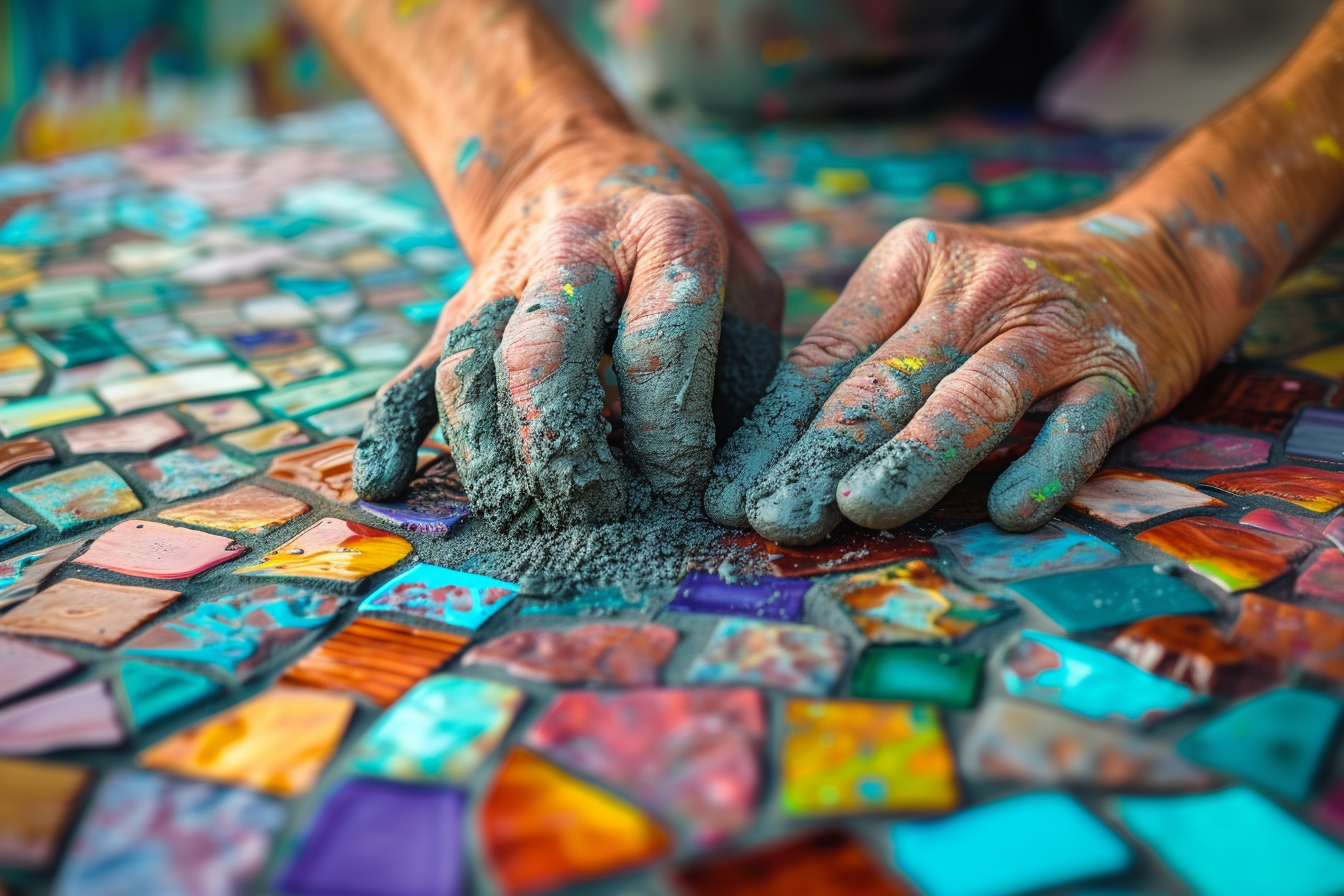
    Adhesive application is a critical stage. Spread a thin layer of adhesive over a small section of your base to start. Press each piece of tesserae into the adhesive delicately, leaving enough space for grouting. Continue section by section until your base is covered.

    Pro tip:

    Maintain a uniform distance between pieces to achieve a harmonious look in your final work.

    Applying the grout

    Applying the Grout

    Once the adhesive has cured — this normally takes about 24 hours — you’re ready for grouting. Mix your grout according to the manufacturer’s instructions, aiming for a peanut butter consistency.

    Step 3: grout application

    Using a grout float or a spatula, apply the grout over the mosaic, pressing it into the spaces between tesserae. Ensure you fill every gap. After filling, gently wipe the surface with a damp sponge to remove excess grout. Keep cleaning your sponge and repeat until the tesserae are clean but ensure not to remove grout from between the pieces.

    Step 4: grout curing and polishing

    Let the grout set slightly, then go over the surface with a damp cloth to remove any haze left behind. After the grout completely dries, polish your mosaic with a soft cloth to give it shine and clarity.

    The art of cohesion

    Creating stunning mosaics is about more than just following steps — it’s about understanding how individual pieces come together to create a coherent whole. As you place each tesserae, consider its color, texture, and shape in relation to those around it. Crafting mosaics is like assembling a puzzle where you make the pieces fit harmoniously within your unique design framework.

    Analyzing your work

    Throughout the process, periodically step back from your work to analyze the overall effect. Check for consistent spacing, color balance, and ensure that your original design intentions are being met. Adjustments are part of the creative process, so don’t hesitate to replace or shift pieces during the creation phase.

    Crafting mosaics as a form of expression

    Mosaics can be a medium for personal expression, a way of playing with light, texture, and color to create something entirely new. Consider the message or emotion you want to convey through your mosaic. Do you want it to be calming, vibrant, or thought-provoking? Your choice of materials, colors, and design intricacy will all have an impact on the final emotional tone of the piece.

    Embracing patience and detail

    Attention to detail will set your mosaic apart. Diligent placement of tesserae, careful shaping, and patient grouting are what transform the ordinary into the extraordinary. As you work, allow yourself to be absorbed in the minutiae; it’s not only part of the creation process but a meditative practice that connects you deeply with your art.

    Crafting mosaics at home requires a blend of planning, creativity, and technique. From the choice of design to the final polish, each step plays a vital role in the creation of your mosaic masterpiece. Whether you’re a hobbyist or an aspiring professional mosaic artist, practice and persistence will lead to the development of your individual style and finesse. Each mosaic you create is a reflection of your artistic journey, an assembly of small pieces that, together, create a stunning visual narrative.

  • Fusion cooking tips: elevate your culinary creations with innovative techniques and flavors

    Fusion cooking tips: elevate your culinary creations with innovative techniques and flavors

    Fusion cooking represents the bold integration of diverse culinary traditions and ingredients, culminating in a captivating symphony of flavors and techniques that transcend geographic and cultural boundaries. By harmoniously marrying the elements of different culinary styles, a chef can create innovative dishes that offer an unparalleled gastronomic experience. At its core, fusion cuisine encourages creativity, experimentation, and open-mindedness, making it the perfect playground for gastronomes who thrive on culinary innovation.

    The art of mixing flavors

    Balancing flavor profiles

    Masterful fusion cooking begins with understanding the flavor profiles of the cuisines you’re trying to combine. Sweet, sour, salty, bitter, and umami are basic taste sensations that can create a balanced, harmonized dish when layered thoughtfully. Start small by combining familiar flavors, and then branch out into more adventurous pairings, always striving to achieve a balance that pleases the palate without overwhelming it.

    Incorporating regional ingredients

    Incorporating regional ingredients from different cultures can bring authenticity to your fusion creations. Source fresh, quality ingredients that are native to the cuisines you’re melding. This not only supports the essence of each culinary tradition but also contributes to a more sustainable practice by valuing local produce.

    Innovative techniques to master

    Understanding cooking methods

    Each cuisine has preferred cooking techniques that define its character. Familiarize yourself with these methods, from the high-heat stir-frying typical of Asian kitchens to the slow-braising fondly practiced in European traditions. By combining these techniques, you can produce a dish with a novel texture and complexity that may surprise and delight.

    Embracing modernist methods

    Modern culinary techniques, such as sous-vide cooking, molecular gastronomy, and the use of hydrocolloids for gelling and emulsifying, open up a realm of possibilities for fusion cuisine. These methods can be utilized to create unexpected textures, forms, and flavor concentrations, giving a cutting-edge edge to traditional dishes.

    Smart pairing decisions

    Choosing the right combinations

    Successful fusion dishes often arise from the right pairings. Look for common elements in different cuisines that can serve as a bridge between distinct flavors. A classic example is the similarity between Spanish and Japanese cuisines with their mutual appreciation for seafood and rice.

    The role of spices and herbs

    Spices and herbs are the aromatic keystones of many ethnic dishes. When blending culinary traditions, select spices and herbs that complement each other, ensuring that one doesn’t overpower the other. Introduce them with a restrained hand, gradually building up complexity.

    Respecting the cultures involved

    Fusion cuisine must be practiced with a deep respect for the cultures whose foods you are combining. Educate yourself on the origins and significance of the dishes and ingredients, and be mindful not to misrepresent or appropriate cultural heritages insensitively. This cultural sensitivity will bring depth and authenticity to your fusion dishes.

    Presentation and plating

    Plating is an art that complements the innovation on the plate. Draw inspiration from the aesthetic traditions of both cultures to present your dish in a way that is both visually appealing and representative. The presentation should invite the diner into the fusion experience before they even take their first bite.

    Consistent practice and experimentation

    As with any culinary endeavor, consistent practice is pivotal to honing your skills in fusion cooking. Experiment with different combinations, tweak your techniques, and continue to expand your knowledge of world cuisines. Remember that mistakes are merely stepping stones to mastering the art of fusion cooking. Keep a detailed journal of your culinary experiments to track your progress and refine your approach.

    Listening to feedback

    Listening to how diners respond to your fusion dishes is crucial for improvement. Engage your guests, ask for their honest feedback, and observe their reactions as they experience the flavors and textures. Use this feedback to fine-tune your approach and to understand the universal palates you’re catering to.

    Innovating responsibly

    While the essence of fusion cooking is innovation, it is important to innovate responsibly. Avoid combining elements for the sake of being different, and instead focus on creating dishes that make sense together, both gastronomically and culturally. Treat each ingredient and technique with respect, and aim for a result that speaks of thoughtfulness and skill.

    Fusion cuisine is not just about bold experiments in flavor and technique; it’s a testament to the possibilities that emerge when cultures meet. Graceful blending of cuisines requires meticulous understanding, appreciation for diversity, and a dash of bravado. There’s no definitive destination in the journey of a fusion chef, as the learning and exploration never truly cease. So don your apron, sharpen your knives, and embark on this exciting culinary adventure where the only limit is your imagination. As you weave through the intricate tapestry of global cuisines, remember that your creations could be the next culinary marvel to tantalize the taste buds of adventurous diners worldwide.